Supplements — Probiotics
Probiotic supplement manufacturing, built around stability.
Probiotic projects are assessed individually. We define strain requirements, CFU target, format and packaging with you, then select the specialist manufacturing partner whose handling, environment and packing suit those requirements — and coordinate production through to release.
The category
A live ingredient changes every decision.
Probiotic cultures are sensitive to moisture, temperature and oxygen, so formulation, format, production environment and packaging have to be considered together rather than in sequence.
Requirements such as strain selection, CFU target, moisture sensitivity, temperature profile and packaging determine which specialist partner is suitable. Probiotic capability is therefore assessed per project, not assumed.
- Formats
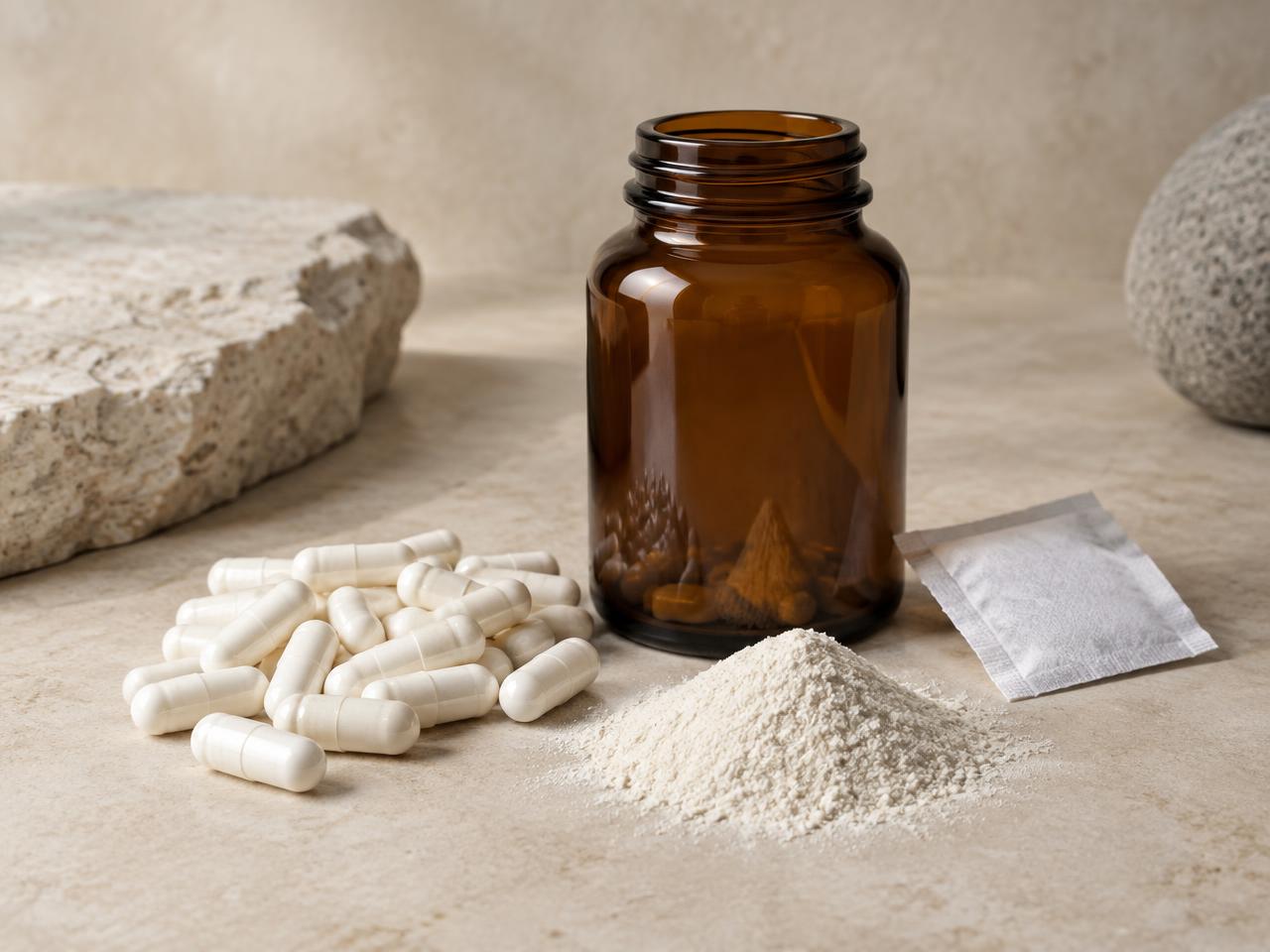
- Capsules or powders, where suitable for the strains
- Routes
- Custom formulation or existing partner formula where available
- Suitability
- Assessed per project with specialist partners

Formulation decisions
The requirements that define a probiotic project.
Set out at the start, because each one narrows the choice of format, pack and partner.
- Strain requirements
- The strains, their documentation and their supply are defined with the brand and qualified culture suppliers.
- CFU target
- The target count per serving, and the point in the product's life it refers to, is a development decision agreed with the partner.
- Formulation architecture
- Probiotic only, or a synbiotic combining cultures with prebiotic fibres or other ingredients — each addition affects moisture and compatibility.
- Shelf-life strategy
- Target shelf life, storage conditions and label wording are development variables, confirmed through the partner's own stability work.
Dosage-form options
Capsule or powder, where suitable.
The format follows from the strains, the serving and the moisture profile. Suitability is confirmed per project.
- 01
Capsules
A common route for probiotic products, where the fill, shell and pack can manage moisture exposure.
- 02
Powders
Single-serve sachets or stick packs, or multi-serve packs, where the formula and barrier allow.
- 03
Synbiotic formulas
Cultures combined with prebiotic ingredients in either format, subject to compatibility.
Suitability flow
From strain requirements to manufacturing partner.
Each requirement filters the options. The partner is selected last, against the full picture.
01
Strain requirements
Strains, documentation and supply defined with culture suppliers.
02
CFU target
Target count per serving agreed as a development decision.
03
Moisture / temperature
Sensitivity profile through production, storage and distribution.
04
Format
Capsule or powder, where suitable for the strains and serving.
05
Packaging
Barrier, closure and desiccant chosen as part of the formula.
06
Manufacturing partner
Selected last, against the full set of requirements — assessed per project.
Ingredients & production
Formulation and production considerations.
Resolved with culture suppliers and the manufacturing partner before production is placed.
Moisture sensitivity
Moisture from other ingredients, the environment or the pack can affect cultures. Excipients, production conditions and barrier are chosen together.
Temperature sensitivity
The temperature profile through production, storage and distribution influences format, pack and partner choice.
Ingredient compatibility
Prebiotics, minerals and botanicals must be checked for compatibility with the cultures.
Format and fill
Capsule shell, fill and powder flow are assessed with the partner for the specific formula.
Label alignment
Declared counts, ingredient names and any claims are aligned with the target market's requirements and the brand's regulatory advisers.
Partner-dependent variables
MOQ, batch size and lead time.
These depend on the strains, the selected partner, the format and the pack. We explain the drivers and compare real quotes.
- 01
Minimum order quantity
Set by format, pack and culture supply.
- 02
Batch size
Balanced against forecast, storage conditions and shelf-life.
- 03
Lead time
Driven by culture availability, packaging components and production slots.
- 04
Unit cost
Shaped by strains, CFU target, format and pack — compared per serving.
Packaging
Packaging as part of the formula.
For probiotics, packaging is a protective element, not only a container. Bottle, closure, desiccant, blister or laminate are chosen for the formula's moisture and oxygen sensitivity.
Pack, barrier and filling line are specified with the product and confirmed with the selected partner.
Quality & documentation
Specification, documentation and release.
Each product is produced against a written specification. Culture and raw-material documentation and certificates of analysis are reviewed before production, and batches are released against the agreed specification.
Quality systems, certifications and stability programmes are held by the relevant manufacturing partner and checked against the product and target market before selection.
Quality framework
Standards represented across our manufacturing partners.
We work with certified specialist manufacturing partners and prioritise partners operating under relevant quality and food-safety standards. Certifications are held by the respective partners; applicability is confirmed for each product and manufacturing route.
Partner standards · where applicable
GMP
Good Manufacturing Practice
ISO 22000
Food safety management
FSSC 22000
Food safety system certification
HACCP
Hazard analysis & critical control points
EKO
Organic certification
Origin signal
Made in EU
Production within our European partner network. A positioning signal — not a certification.
Certifications are held by individual manufacturing partners where applicable. AVENTRO does not itself issue or hold these certifications.
Manufacturer selection
Choosing a probiotic supplement manufacturer.
Not every supplement manufacturer is set up for probiotics. We assess partners on:
- 01
Probiotic experience
Track record with the culture types and formats the project requires.
- 02
Environment control
Production conditions suited to moisture- and temperature-sensitive ingredients.
- 03
Format capability
Capsule filling or powder blending and filling, as the formula requires.
- 04
Stability approach
How the partner supports CFU targets and shelf-life strategy for the specific product.
- 05
Documentation
Quality system and certifications appropriate for the target market.
- 06
Commercial terms
MOQ, unit cost and lead time compared on one specification.
Product route
Custom formulation or private label.
Custom probiotic formulation
Your own strains, CFU target, synbiotic ingredients, format and pack, defined with you and placed with a suitable partner.
Private label from an existing formula
A faster route where a suitable ready formula exists. Actual formula availability depends on the selected specialist partner and is confirmed per project.
Manufacturing route
From brief to released batch.
- Step 01
Brief
Concept, strain direction, CFU target, format, market and volumes.
- Step 02
Assessment
Requirements reviewed for format, pack and partner suitability.
- Step 03
Sourcing & partner
Cultures and ingredients sourced; suitable partners compared.
- Step 04
Production
Materials and packaging aligned to the production slot.
- Step 05
Release
Batch released against specification, packed and dispatched.
The AVENTRO role
How we coordinate a probiotic project.
AVENTRO is not tied to a single production facility. We define the product with you, source the raw materials, select the specialist manufacturing partner from our European network that fits the format and volume, and coordinate production through to released, packed goods.
Manufacturing formats
How it can be manufactured.
Services often combined with it.


Start a project
Planning a probiotic or synbiotic product?
RFQs and project briefs: inquiry@aventro.eu